
Why Do Contractors Give Different Estimates for the Same Job?
You finally decided to remodel the kitchen. You did the responsible thing and got three estimates. And now you’re sitting at your table staring at three numbers that aren’t even close to each other — and wondering if one of these people is trying to rip you off, or if one of them is just too good to be true.
I’ve been on the contractor’s side of that table for years, and I want to let you in on what’s actually going on. Because the answer isn’t what most people think — and understanding it could save you tens of thousands of dollars and a year of your life.
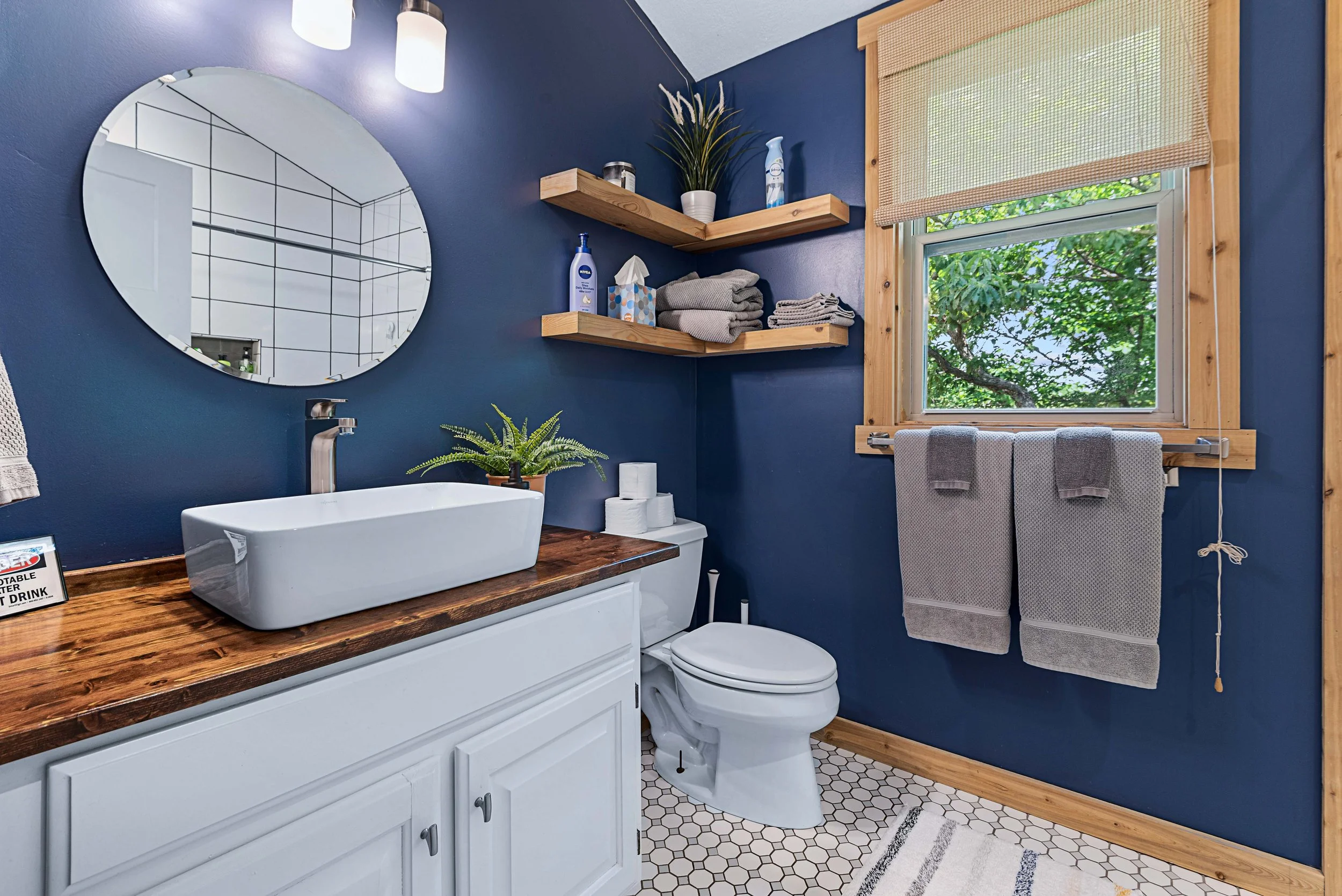
Clean and fresh bathroom remodel with blue wall.
A little about where I’m coming from
I run Abode Construction Services. We started back in 2017 as a handyman service, and over the years we’ve grown into a full design-and-remodel company — twelve-plus employees now, focused mostly on kitchen and bathroom remodels, though we still do the classic handyman work too.
But here’s the part that actually matters for this conversation: before I ever swung a hammer for a living, I owned a coffee shop in town. I came up in the food industry. And the food industry teaches you one thing above all else — hospitality. Taking care of people. Anticipating what they need before they have to ask.
That’s the core of who I am, and it’s the core of how Abode operates. One of our company values is “Wear the Shoes” — a reference to walking a mile in another person’s shoes. Every decision we make, every person we hire, runs through that filter. And as you’ll see, hospitality has everything to do with why estimates look the way they do.
I’ll be straight with you up front: Abode is usually not the cheapest contractor in town. Stick with me, because by the end of this you’ll understand exactly why that’s a feature, not a bug.
So why are the estimates so different?
Let’s clear the obvious stuff out of the way first, because most articles stop here.
Yes, different contractors spec different products. One guy quotes the builder-grade faucet, another quotes the nicer one — the prices move.
Yes, overhead varies. A one-man operation working out of his truck doesn’t carry the costs a twelve-person company does. We have an office, insurance, payroll, systems. That shows up in the number.
Yes, different companies pay their employees differently. In order to keep good employees, you must pay them like you want to keep them. We want our carpenters to be able to raise a family, buy a home, and save for retirement.
Those things are real and do impact pricing, but in my experience that’s not where the big gap comes from. The real difference lives in methodology and planning.
Here’s what’s actually happening when you get a suspiciously low estimate: that contractor isn’t accounting for the changes that come with every construction project. He’s quoting a clean, best-case version of the job that doesn’t survive contact with reality. So the number looks great on day one.
Then the project starts. And the fees and material costs begin getting tacked on as you go — often without you even being told. By the end, you’re paying far more than the original contract. And because none of those change orders were ever properly documented, you have no way to hold the contractor accountable for any of it. You just pay.
This is the single most important idea I can give you, so I’m going to put it plainly:
The low-estimate contractor has the potential for a low floor (cost) project but comes with the risk of a high ceiling (final end cost). Abode usually has a higher floor but a much lower ceiling.
Our estimate might be higher on the front end, because we plan the job thoroughly before we start. But that planning is exactly what saves our clients big money on the back end. Cost, schedule, problems — it’s all clear and upfront. Our clients are never left in the dark. You may pay a higher minimum, but you’re protected from the runaway maximum that buries people who chased the lowest bid.
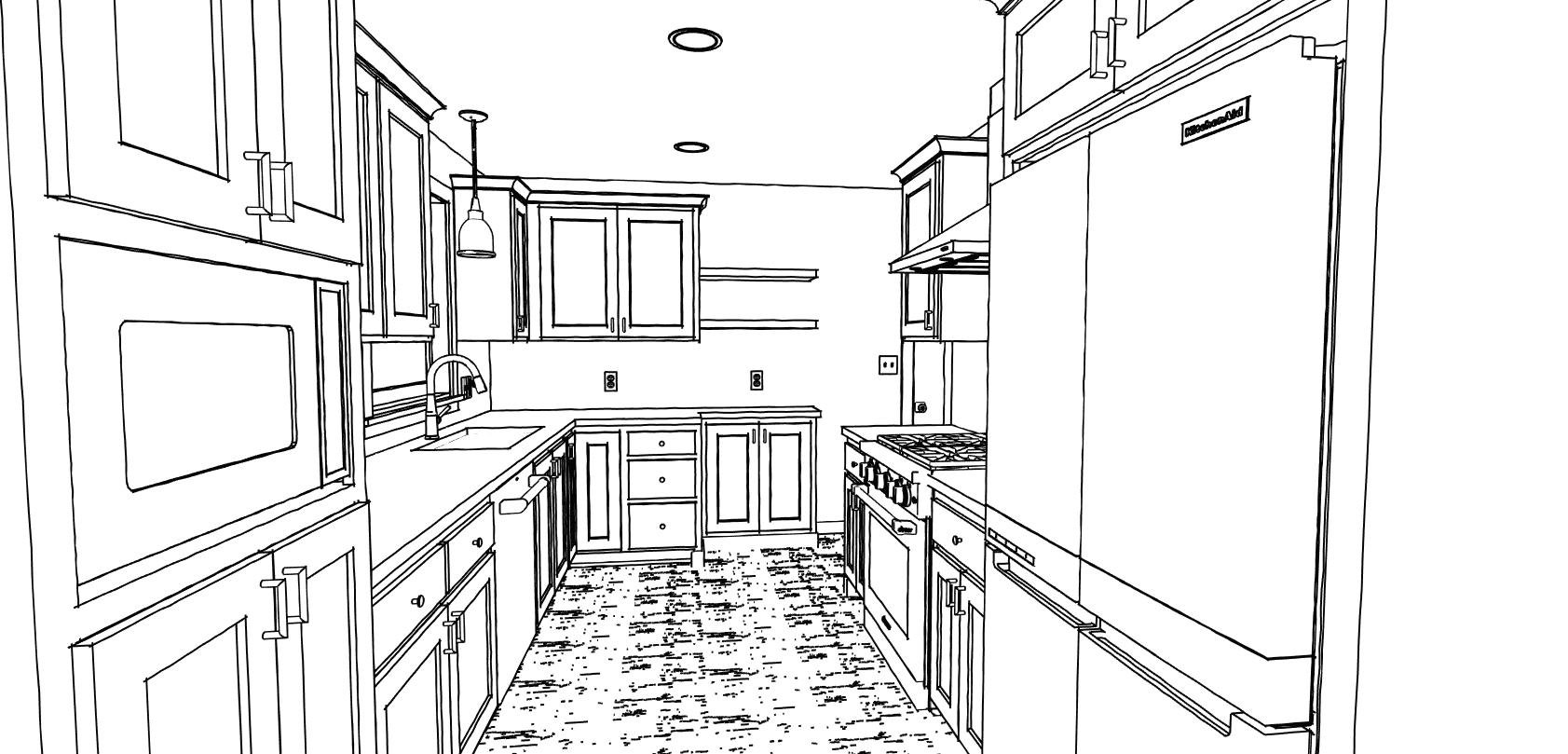
Architectural drawing of kitchen remodel.
What that looks like when it goes wrong
A couple of years ago, a homeowner came to us after hiring another contractor to build an addition on their house. That contractor got about halfway through — and then the project just stalled out. The client was left sitting in an unfinished home, waiting for answers, for over a year.
Imagine that. A hole in your house and a phone that stops getting answered.
Eventually the frustration boiled over and they reached out to us. We took the existing plans, got organized, and moved quickly to finish the job. Here’s what they wrote afterward:
“It was a pleasure working with Abode. They came in to finish a project that had stalled with the previous contractor and the process went so much smoother with Abode. They were great about communicating throughout the process and were quick to complete the work, which was done with great quality. I would highly recommend working with Abode for any home remodeling project.”
I’d bet money that the original contractor was the “cheaper” choice on paper. Look how that math worked out.
What you should actually do with those three estimates
Okay — practical advice. You’ve got the bids in front of you. Here’s what I’d tell a friend to do.
Make them compare line by line. If one of those estimates is from a company like ours, it’s going to be detailed — honestly, sometimes overwhelmingly so. Take that detailed estimate to the cheaper contractor and ask them to match it line by line. If they can’t match it, that’s not because they’re more efficient. It’s because they’re neglecting something — and you’ll be the one who pays for whatever they left off.
Ask about their change-order process. This is the big one. When they hit a bump mid-project — and they will — how do they document the change, and how do they inform you? At Abode, we never proceed with a change order without the client’s signature. That means our clients always know what the final cost is going to be. There are no surprises waiting at the end.
Ask to see real documentation from a previous job. Here’s a test almost nobody thinks to run: ask the contractor to show you an actual change-order document from a recent project. A physical example. If they can’t produce one, be very wary. It probably means changes get handled with a verbal “oh, that’ll be a little extra” and a bigger bill at the end that you can’t dispute.
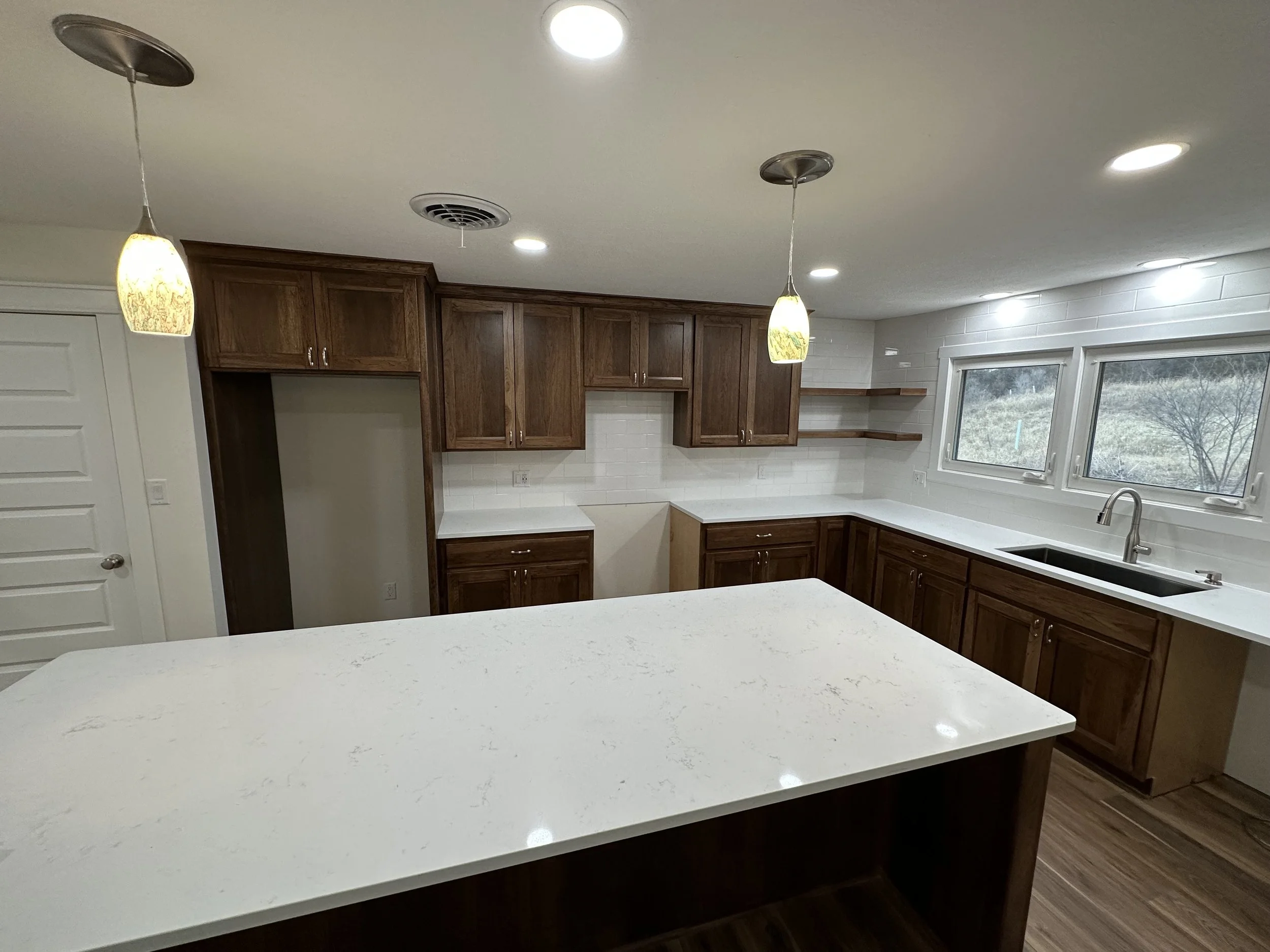
A newly remodeled kitchen with dark walnut cabinets and white countertops.
The thing I really want you to understand
Here’s the truth underneath all of this.
Every construction project will reach a tension point. Something goes wrong. Something breaks. Something unexpected shows up behind a wall. It happens on every single job, including ours.
A good company, a good lead carpenter, a good project manager — they are not measured in the showroom, or on the site visit, or by the low number on the estimate, or by the Google search that brought you to them. They are measured in those tension moments. That is the entire ballgame.
And that’s where our hospitality value comes all the way back around. When the hard moment hits, we genuinely want to serve our clients through it. We want them to come out the other side feeling like the winner. We want them to feel comfortable around our team even when things are stressful.
That’s the Abode way. It started in a coffee shop, and it shows up on every job site we run.
So when you’re staring at those three estimates, don’t ask “which number is lowest?” Ask “which of these people do I trust when something breaks?” Get them comparing line by line. Ask how they handle changes. Make them show you the paperwork. The right contractor won’t flinch at any of it — because being clear with you is the whole point.
If you’re planning a kitchen or bathroom remodel and you want a partner who’ll keep you out of the dark from day one through the tension point and out the other side, we’d love to talk. That’s what we’re here for.